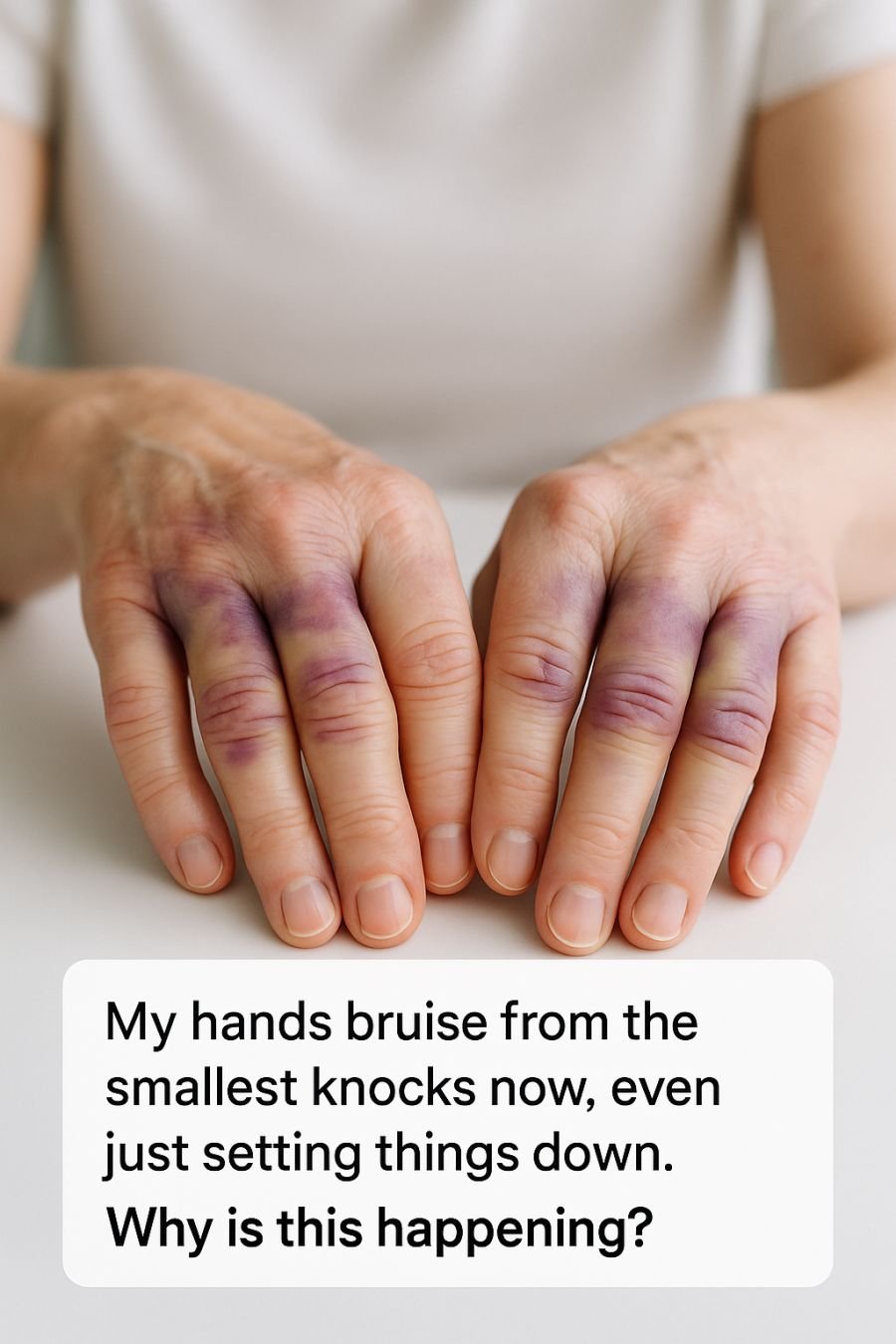
Bruising can be an unsettling experience, especially when it seems to happen with the slightest touch or bump. Many people notice that as they age, their skin becomes more prone to bruising, even from everyday activities like setting down a cup or brushing against a table. This change can be alarming, leading to questions about what might be happening under the skin.
While occasional bruising is normal, frequent or severe bruising can signal underlying issues. This article explores the various factors that contribute to easy bruising, particularly in the hands, and offers insights into potential causes, such as aging, nutritional deficiencies, and medication use. Understanding these factors can help you take steps to protect your skin and maintain your health
1. How Bruising Actually Happens Under the Skin
Bruising occurs when small blood vessels, known as capillaries, break and leak blood into the surrounding tissues. This leakage causes the characteristic discoloration of a bruise, which often starts as a dark purple or blue mark and gradually fades to yellow or green as the body reabsorbs the blood.
For a bruise to form, a certain amount of force is typically required to break the capillaries. However, the threshold for bruising can vary significantly from person to person and can be influenced by several factors, including skin thickness, blood vessel strength, and overall health. In some people, even a minor bump or pressure can lead to noticeable bruising.
2. The Role Of Aging: Why Older Hands Bruise So Easily
As we age, our skin undergoes several changes that can increase the likelihood of bruising. One of the primary factors is the thinning of the skin, which occurs as the production of collagen and elastin decreases. Collagen is a protein that provides structure and strength to the skin, and its loss makes the skin more fragile and less able to cushion underlying blood vessels from impact.
Additionally, aging can lead to changes in the blood vessels themselves, making them more prone to breaking. These changes can be exacerbated by other age-related factors, such as decreased circulation and slower healing processes, which can cause bruises to appear more frequently and take longer to heal.
3. Thinning Skin And Collagen Loss: When Everyday Knocks Leave Marks
Thinning skin is a common consequence of aging and is largely due to the decline in collagen production. Collagen makes up about 75% of the skin’s dry weight, and as its levels decrease, the skin becomes less resilient and more susceptible to damage.
In addition to collagen loss, the natural reduction of subcutaneous fat, which acts as a cushion for the skin, can make even minor impacts feel more significant, leading to bruising from everyday activities. This combination of thinner skin and reduced protective cushioning means that what once might have been a minor knock can now result in a noticeable bruise.
4. Sun Damage Over The Years And Its Hidden Impact On Bruising
Chronic sun exposure can significantly damage the skin, leading to a condition known as photoaging. This damage is characterized by the breakdown of collagen and elastin fibers, which weakens the skin and increases its susceptibility to bruising.
Over time, cumulative sun damage can thin the skin and compromise its structural integrity. This makes blood vessels more vulnerable to breaking, even with minimal pressure. Protecting the skin from UV rays with sunscreen and clothing can help prevent further damage and reduce the risk of bruising.
5. Blood Thinners, Aspirin, And Other Medications That Make Bruising Worse
Certain medications can increase the likelihood of bruising by affecting the blood’s ability to clot. Blood thinners, such as warfarin or heparin, are commonly prescribed to prevent blood clots but can lead to more frequent bruising as they reduce the blood’s natural clotting ability.
Nonsteroidal anti-inflammatory drugs (NSAIDs), such as aspirin and ibuprofen, can also contribute to bruising by inhibiting platelet function, which is crucial for blood clotting. If you notice increased bruising while taking these medications, it’s important to discuss this with your healthcare provider to determine if adjustments are needed.
6. Vitamins, Nutrition, And Anemia: Could A Deficiency Be To Blame?
Nutritional deficiencies can play a significant role in the tendency to bruise easily. Vitamins such as C and K are essential for maintaining healthy skin and blood vessel walls. Vitamin C is crucial for collagen synthesis, while vitamin K is important for blood clotting.
Anemia, particularly iron-deficiency anemia, can also contribute to increased bruising. Iron is necessary for the production of hemoglobin, which helps transport oxygen in the blood. Without adequate iron, the body may have difficulty repairing damaged blood vessels, leading to more pronounced and frequent bruising.
7. When Easy Bruising Signals A Blood Or Clotting Disorder
In some cases, frequent or severe bruising can indicate an underlying blood or clotting disorder. Conditions such as hemophilia, von Willebrand disease, or thrombocytopenia can affect the body’s ability to form stable blood clots, leading to excessive bruising and bleeding.
If you experience sudden changes in your bruising pattern or notice other symptoms, such as frequent nosebleeds or excessive bleeding from minor cuts, it is important to seek medical evaluation. Blood tests can help diagnose these conditions and guide appropriate treatment.
8. Steroid Creams, Injections, And Other Treatments That Weaken Skin
Long-term use of corticosteroids, whether in cream, pill, or injection form, can weaken the skin and make it more susceptible to bruising. Steroids interfere with the production of collagen, which is necessary for maintaining skin strength and elasticity.
People who use topical steroid creams for conditions like eczema or psoriasis may notice increased bruising in the treated areas. It’s important to use these medications as directed by a healthcare provider and to discuss any concerns about bruising.
9. Viral Hacks For ‘Strengthening’ Skin And Veins: What Actually Helps?
The internet is full of purported remedies for strengthening the skin and reducing bruising, ranging from using certain oils to taking specific supplements. While some of these hacks may offer minimal benefits, it’s important to approach them with caution.
Maintaining a healthy diet rich in vitamins and antioxidants can support skin health. Additionally, gentle exercises that improve circulation can help strengthen blood vessels. However, any supplement or treatment should be discussed with a healthcare professional to ensure it’s safe and effective for your situation.
10. Simple Daily Habits To Protect Fragile Hands From Bruising
Adopting certain habits can help protect your skin and minimize bruising. Wearing protective gloves while performing activities that could lead to bumps or scratches can provide a physical barrier for your skin.
Keeping your skin moisturized can also help maintain its integrity. Using gentle skin care products and avoiding harsh chemicals can prevent further damage. Additionally, staying hydrated and maintaining a balanced diet can support overall skin health.
11. Red Flags: When Sudden Or Severe Bruising Means See A Doctor Now
While occasional bruising is usually not a cause for concern, there are certain situations where medical attention is warranted. If you experience sudden or severe bruising without a clear cause, it could indicate an underlying health issue
Other red flags include bruising accompanied by other symptoms, such as unexplained bleeding, fatigue, or changes in skin texture. In these cases, it is important to seek medical evaluation to rule out serious conditions and receive appropriate care.