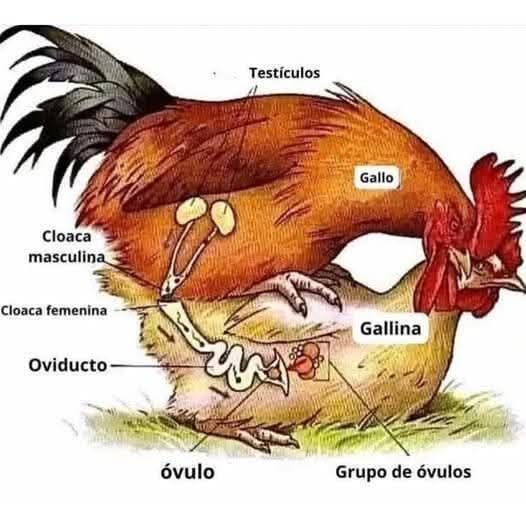
The image above beautifully illustrates the fascinating process of egg formation in chickens, showcasing the biological interaction between a rooster (gallo) and a hen (gallina). Although it may seem simple, the process is an intricate act of nature that ensures the continuation of one of the most common species on Earth.
When a rooster mates with a hen, the transfer of sperm takes place through the contact of their cloacas — the reproductive and excretory opening found in birds. The rooster’s sperm travels into the hen’s reproductive system, specifically into the oviduct, where it can fertilize an ovum (egg cell). This process is known as the “cloacal kiss.”
Inside the hen, the egg begins to form in stages. First, the yolk (which originates from the ovary) is released into the oviduct. If sperm is present, fertilization occurs at this stage. Then, as the yolk moves through the oviduct, layers of albumen (the egg white), membranes, and finally the shell are added. The entire process can take about 24–26 hours from start to finish.
Once fully formed, the egg is laid through the cloaca. Interestingly, even without mating, hens can still produce eggs—though these will be unfertilized and incapable of developing into chicks.
This remarkable reproductive system highlights how nature has designed even the most ordinary farm animals with extraordinary precision. The next time you crack an egg, you’re holding the result of a complex and elegant biological process perfected through evolution.