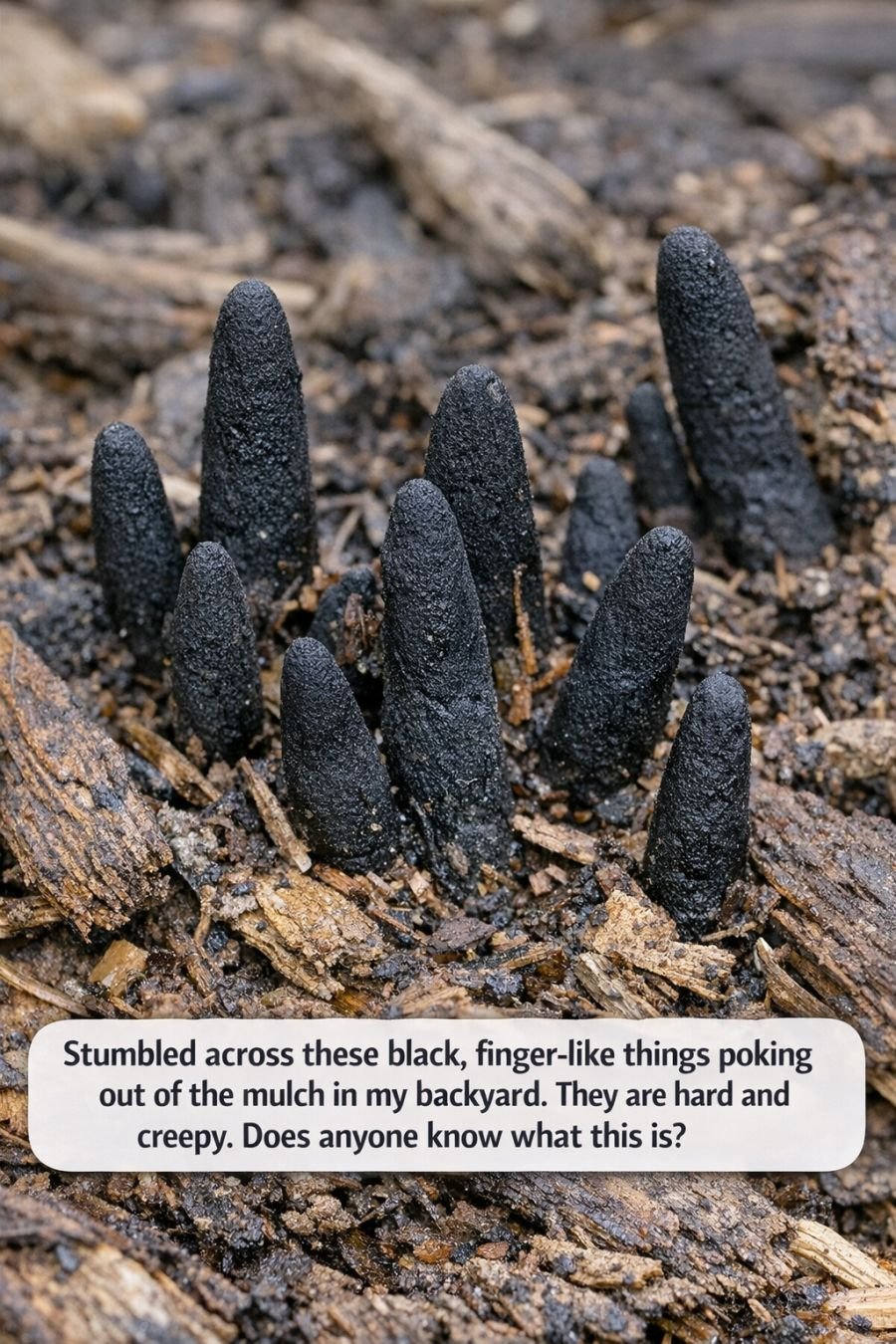
Discovering something unusual in your backyard can be both intriguing and unsettling, especially when it involves peculiar growths emerging from the ground. Many homeowners have experienced the shock of finding black, finger-like protrusions poking out from their garden mulch. These strange structures often raise immediate questions and concerns about what they might be and whether they pose any danger.
These curious formations could very well be a type of fungus known as ‘Dead Man’s Fingers.’ While the name itself evokes a sense of horror, understanding what these growths truly are can dispel fear and replace it with fascination. This article explores the characteristics, identification, and implications of finding this eerie fungus in your backyard.
1. First Look: Why These Black, Finger-Like Growths Are So Creepy
The sight of black, finger-like growths emerging from the mulch can be quite disturbing at first glance. Typically, these fungi are black or dark brown, elongated, and can grow up to 3 to 4 inches in length. The unsettling appearance resembles skeletal fingers reaching out from the earth, hence the common name ‘Dead Man’s Fingers.’
The texture of these growths is hard and woody when mature, adding to their creepy allure. Their transformation from a soft, whitish or pale structure to a rigid, blackened form contributes to their macabre reputation. The stark contrast between these fungi and the surrounding mulch or soil can make them stand out even more, drawing attention and sparking curiosity.
2. Meet Dead Man’s Fingers: The Fungus Lurking in Your Mulch
Dead Man’s Fingers, scientifically known as Xylaria polymorpha, is a saprobic fungus, meaning it feeds on decaying organic matter. This fungus is commonly found in deciduous forests but can also appear in garden settings, particularly where there is an abundance of wood chips or decomposing wood.
This fungus is part of the Xylariaceae family and is primarily responsible for breaking down cellulose and lignin in dead wood, playing a crucial role in nutrient cycling within ecosystems. The fruiting bodies often emerge in clusters, resembling a hand with multiple fingers, which adds to the eerie imagery associated with them.
3. How To Positively Identify Dead Man’s Fingers in Your Yard
To positively identify Dead Man’s Fingers, look for its distinct characteristics: elongated, finger-like structures that are black or dark brown when mature. Initially, they may appear pale or whitish before darkening. The surface is typically smooth, and the interior is white when cut open.
These fungi are typically found growing from buried or decaying wood, often at the base of trees, stumps, or within mulch. If you suspect you have found Dead Man’s Fingers, consider taking a sample to a local extension office or a mycologist for confirmation.
4. What Causes This Fungus To Appear in Mulch and Garden Beds
Dead Man’s Fingers thrive in environments rich in decomposing wood, which is why they often appear in mulch or garden beds with a high content of wood chips. The presence of decaying organic matter provides the nutrients necessary for the fungus to grow.
Moisture and shade are also key factors that contribute to the growth of this fungus. Areas that are frequently damp or receive limited sunlight create optimal conditions for fungal development. Seasonal changes, particularly in spring and fall, can also trigger their appearance as the climate becomes more favorable for fungal activity.
5. Is Dead Man’s Fingers Dangerous to People, Pets, or Plants?
The good news is that Dead Man’s Fingers is not harmful to humans, pets, or plants. While the appearance might be unsettling, this fungus does not pose a threat through touch or proximity. It is not considered edible, however, due to its tough texture and unappealing taste.
For plants, the presence of Dead Man’s Fingers is not detrimental as it primarily targets dead matter for decomposition. It does not parasitize living plants, making it a benign presence in your garden from a horticultural perspective.
6. Common Myths and Mistaken IDs: What It’s Often Confused With
Dead Man’s Fingers is often confused with other types of fungi or plant structures due to its unusual appearance. It’s commonly mistaken for Stinkhorn fungi, which also have an elongated shape but differ in color and texture.
Another common confusion is with decaying plant material or roots that may also appear blackened and finger-like. These can be differentiated by their lack of a distinct structure or fungal characteristics such as spore production.
7. What To Do If You Find Dead Man’s Fingers on Your Property
If you find Dead Man’s Fingers on your property, there is generally no cause for alarm. Consider leaving them in place, as they play a beneficial role in breaking down organic matter and enriching the soil.
If their presence is undesirable for aesthetic reasons, you can gently remove them, ensuring that you also remove any decaying wood substrates to prevent regrowth.
8. Safe Removal and Disposal Tips for Homeowners
To safely remove Dead Man’s Fingers, wear gloves to protect your hands from any potential irritants. Gently pull the fruiting bodies from the ground, ensuring that you also remove any underlying decaying wood.
Dispose of the fungi in a compost bin or yard waste container. Avoid discarding them in natural areas where they might spread unless you wish to encourage their growth in a different location for decomposition purposes.
9. Can You Prevent Dead Man’s Fingers From Coming Back?
Preventing Dead Man’s Fingers from returning involves reducing the amount of decaying wood in your garden. Regularly turning and refreshing mulch can help, as can ensuring good drainage and sunlight exposure to reduce moisture levels.
Consider using alternative mulch materials that break down less readily, such as pine needles or gravel, to discourage fungal growth.
10. When To Call an Expert About Strange Fungi in Your Yard
If you are unsure about the identification of a fungal growth or if you suspect it might be harmful, it’s wise to consult with a mycologist or a local extension service. They can provide accurate identification and advice on management if needed.
Calling an expert is also recommended if you notice a widespread fungal issue that could affect the health of your trees or shrubs, as professional intervention might be necessary.
11. Turning Creepy Discoveries Into Curiosity About Backyard Fungi
Finding something as unusual as Dead Man’s Fingers in your yard can spark a newfound interest in mycology, the study of fungi. These organisms play essential roles in ecosystems, from decomposing organic matter to forming symbiotic relationships with plants.
Embracing a sense of curiosity can lead to a deeper appreciation of the natural world and the fascinating life cycles occurring beneath our feet. Consider exploring local resources or joining a mycology club to learn more about the diverse and intriguing world of fungi.