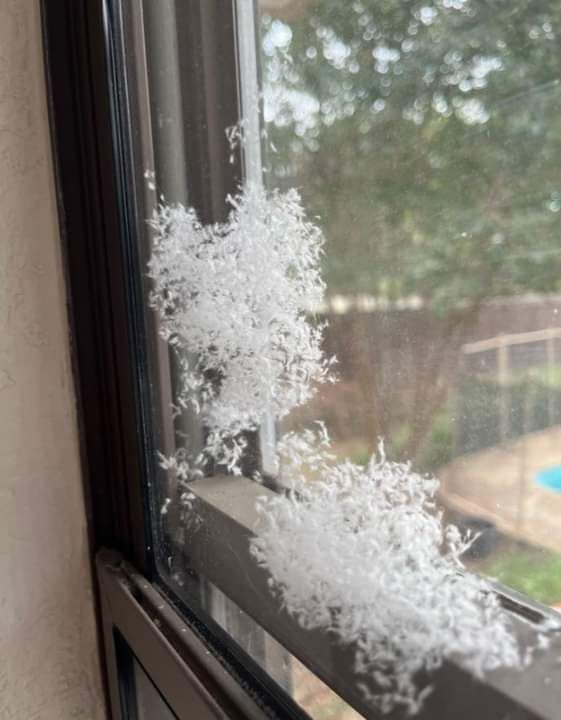
If you notice condensation coating your windows in the morning, your home may have excess humidity or moisture. This increases the risk of mold, especially during colder months when the warm indoor air meets the cold glass. A strange white fuzz around your windows could be a sign to call a professional for mold removal.
The white fuzz could be one of several types of mold, each varying by the fungus species, surface it’s growing on, and surrounding conditions. It often appears white, greenish, or light gray with a soft, web-like texture, typically thriving in damp places like basements, bathrooms, attics, and on window sills.

Windows are especially prone to white mold due to their exposure to dirt, dust, and moisture from leaks or condensation. This combination creates an ideal environment for spores to grow. Unlike noticeable black mold, white mold can be subtle and hard to spot, particularly if it blends with a similarly colored window frame.
Prolonged exposure to white mold can lead to respiratory infections, allergies, headaches, nausea, and more. For this reason, it’s crucial to remove it promptly and avoid extended contact with the mold.

It’s easy to mistake white mold for efflorescence, which also looks like white fuzz in damp areas like windows and bathrooms. While mold is a fungus that grows due to moisture, efflorescence is caused by water vapor drawing salts from concrete or bricks. A simple test can differentiate them: if water dissolves the white fuzz, it’s likely efflorescence, not mold.
Efflorescence doesn’t pose the health risks that mold does but can still harm masonry surfaces. If left untreated, it may lead to mildew and mold growth. Though unsightly, efflorescence can typically be removed with a power washer, wire brush, or specific chemical cleaner, followed by repairs to any cracks allowing moisture inside.