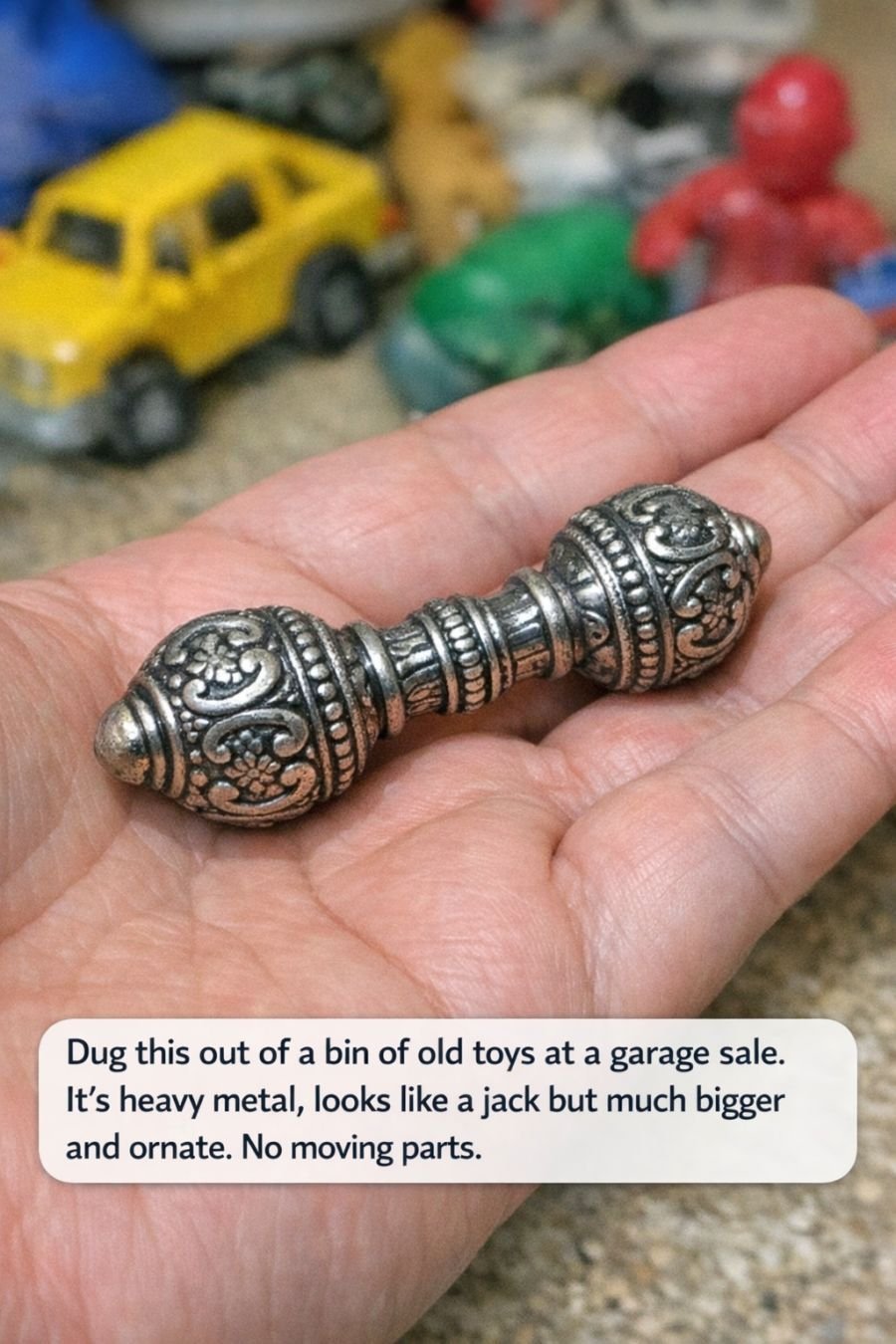
Garage sales are treasure troves for the curious and the nostalgic, offering an assortment of items from different eras and backgrounds. Among the piles of forgotten toys and household objects, it’s not uncommon to stumble upon something intriguing and mysterious. This was precisely the case when a peculiar, heavy metal object resembling an oversized jack was unearthed from a bin of old toys.
At first glance, its purpose seemed as elusive as its origin. Its substantial weight and ornate design set it apart from the rest of the items in the bin, sparking a curiosity that begged to be explored. What was this object, and how did it end up among toys at a garage sale? The journey to identify and understand this artifact takes us through history, craftsmanship, and the fascinating world of antique collecting.
1. The Curious Find: A Heavy Metal “Jack” From A Toy Bin
As the object was pulled from the depths of the toy bin, its unique characteristics became apparent. It was unlike any toy jack one might expect to find, both in size and complexity. Measuring approximately 8 inches in length and weighing around 3 pounds, it was too large and heavy to be a playful object for children. Its intricate design, featuring ornate patterns and a polished finish, suggested it might have served a more sophisticated purpose. Such a discovery among children’s toys was puzzling, raising questions about its true function and origin.
2. First Impressions: Weight, Shape, And Ornate Detailing
Upon closer inspection, the object’s weight was one of its most striking features. Weighing in at around 3 pounds, it was far too substantial to serve as a simple toy. Its shape was reminiscent of a traditional jack, yet larger and more elaborate. The detailing was exquisite, with swirling engravings and a patina that hinted at age and artistry. Measuring about 8 inches across, its presence was commanding, suggesting it was meant to be seen and appreciated.
3. Why It’s Not A Toy: Ruling Out Jacks, Paperweights, And Decor
Given its weight and size, it was quickly apparent that this object was not a traditional toy jack. Furthermore, its ornate detailing and lack of moving parts ruled out its use as a functional toy. While its heft could suggest a use as a paperweight, the decorative elements implied a purpose beyond mere utility. The craftsmanship and design indicated that it was not simply a piece of home decor, but rather something with historical significance or specialized use.
4. Clue In The Craftsmanship: Materials, Patina, And Age
The craftsmanship of the object provided crucial clues to its background. Made from a heavy metal, possibly brass or bronze, it had developed a rich patina over time. This aging process hinted at years of existence, perhaps dating back to the late 19th or early 20th century. The ornate engravings showcased a level of detail that suggested skilled artisanship, possibly indicating a piece that was both functional and decorative in its time.
5. What Is It Really? Identifying The Object As An Antique Knife Rest
After much deliberation and research, the object was finally identified as an antique knife rest. Knife rests were popular in the 18th and 19th centuries, used to keep cutlery off the tablecloth during meals. This particular piece, with its elaborate design and significant weight, was likely used in a formal dining setting, adding both utility and aesthetic appeal to the dining experience.
Garage sales are treasure troves for the curious and the nostalgic, offering an assortment of items from different eras and backgrounds. Among the piles of forgotten toys and household objects, it’s not uncommon to stumble upon something intriguing and mysterious. This was precisely the case when a peculiar, heavy metal object resembling an oversized jack was unearthed from a bin of old toys.
At first glance, its purpose seemed as elusive as its origin. Its substantial weight and ornate design set it apart from the rest of the items in the bin, sparking a curiosity that begged to be explored. What was this object, and how did it end up among toys at a garage sale? The journey to identify and understand this artifact takes us through history, craftsmanship, and the fascinating world of antique collecting.
1. The Curious Find: A Heavy Metal “Jack” From A Toy Bin
As the object was pulled from the depths of the toy bin, its unique characteristics became apparent. It was unlike any toy jack one might expect to find, both in size and complexity. Measuring approximately 8 inches in length and weighing around 3 pounds, it was too large and heavy to be a playful object for children. Its intricate design, featuring ornate patterns and a polished finish, suggested it might have served a more sophisticated purpose. Such a discovery among children’s toys was puzzling, raising questions about its true function and origin.
2. First Impressions: Weight, Shape, And Ornate Detailing
Upon closer inspection, the object’s weight was one of its most striking features. Weighing in at around 3 pounds, it was far too substantial to serve as a simple toy. Its shape was reminiscent of a traditional jack, yet larger and more elaborate. The detailing was exquisite, with swirling engravings and a patina that hinted at age and artistry. Measuring about 8 inches across, its presence was commanding, suggesting it was meant to be seen and appreciated.
3. Why It’s Not A Toy: Ruling Out Jacks, Paperweights, And Decor
Given its weight and size, it was quickly apparent that this object was not a traditional toy jack. Furthermore, its ornate detailing and lack of moving parts ruled out its use as a functional toy. While its heft could suggest a use as a paperweight, the decorative elements implied a purpose beyond mere utility. The craftsmanship and design indicated that it was not simply a piece of home decor, but rather something with historical significance or specialized use.
4. Clue In The Craftsmanship: Materials, Patina, And Age
The craftsmanship of the object provided crucial clues to its background. Made from a heavy metal, possibly brass or bronze, it had developed a rich patina over time. This aging process hinted at years of existence, perhaps dating back to the late 19th or early 20th century. The ornate engravings showcased a level of detail that suggested skilled artisanship, possibly indicating a piece that was both functional and decorative in its time.
5. What Is It Really? Identifying The Object As An Antique Knife Rest
After much deliberation and research, the object was finally identified as an antique knife rest. Knife rests were popular in the 18th and 19th centuries, used to keep cutlery off the tablecloth during meals. This particular piece, with its elaborate design and significant weight, was likely used in a formal dining setting, adding both utility and aesthetic appeal to the dining experience.
Proper care for an antique knife rest involves gentle cleaning to preserve the patina and integrity of the metal. Avoid abrasive materials that could damage the engravings. Displaying the piece in a protective case or on a velvet-lined shelf can highlight its beauty while protecting it from dust and environmental factors.
11. Where To Go Next: Getting Expert Opinions And Appraisals
For those interested in further understanding or appraising their find, consulting with an expert in antiques or a professional appraiser is recommended. They can provide insights into the object’s history and potential value. Antique fairs, specialized auctions, or online collectible communities can also be valuable resources for connecting with knowledgeable individuals and enthusiasts.