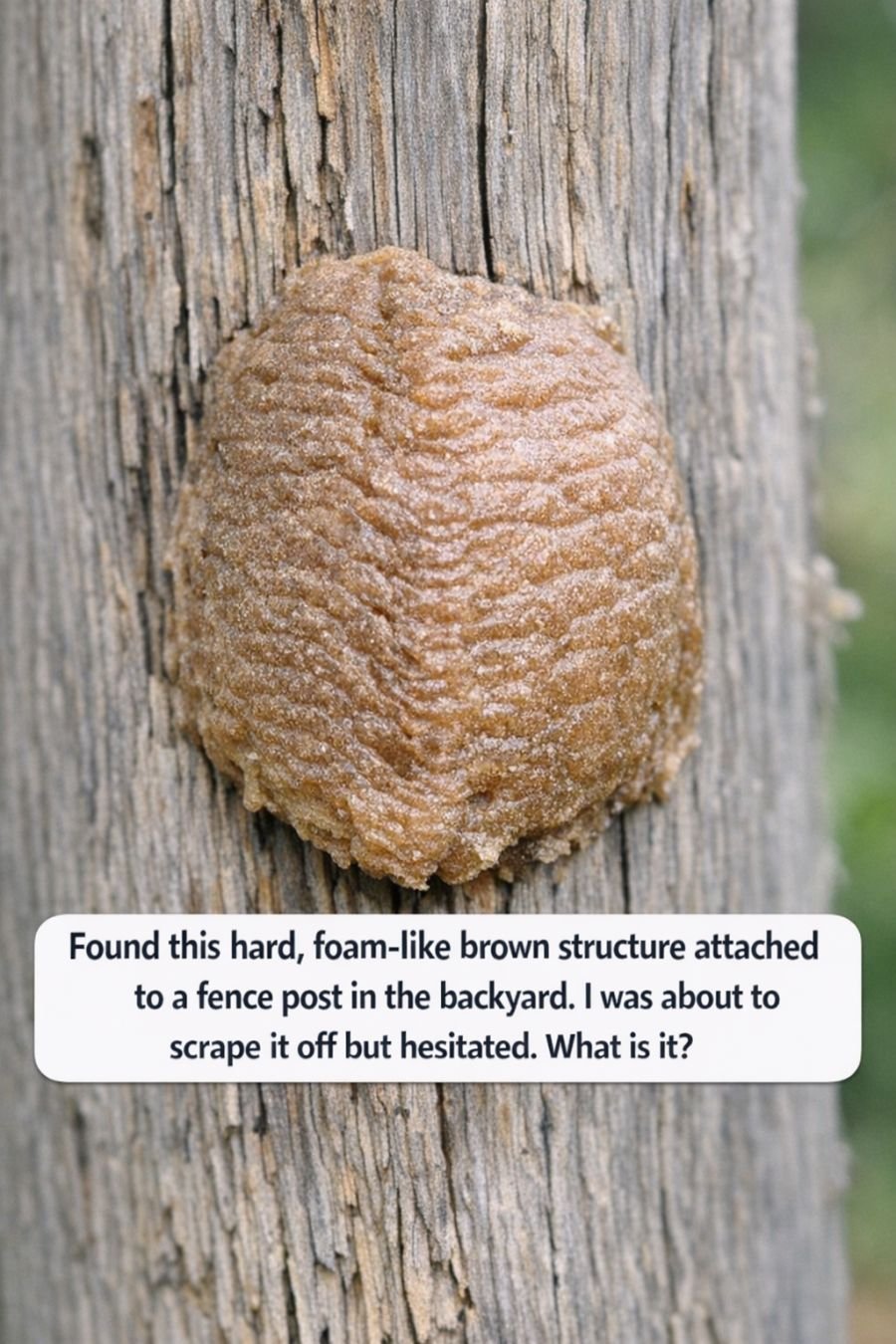
Discovering an unusual structure in your backyard can be both intriguing and puzzling. You might encounter a hard, foam-like brown structure attached to a fence post or a branch, which prompts curiosity and a hint of hesitation. Is it something harmful, or perhaps a natural wonder? Before you scrape it off, it’s important to understand what you’ve found.
In your backyard ecosystem, various insects and organisms utilize creative means to ensure their survival and reproduction. What you’ve stumbled upon is most likely an egg case, or ootheca, of a praying mantis. This small, seemingly insignificant structure plays a crucial role in the life cycle of a fascinating insect species. Let’s explore what makes this discovery significant and why you might want to leave it be.
1. The Mystery Foam: Why This Backyard Find Stops People in Their Tracks
The egg case of a praying mantis, known as an ootheca, often catches people off guard due to its peculiar appearance. This structure is typically tan to light brown in color, with a rough, foam-like texture that can easily be mistaken for a small wasp nest or a fungal growth. Measuring about 1 to 2 inches in length and roughly half an inch in width, these egg cases are usually found attached to twigs, stems, or man-made structures like fence posts.
People often hesitate when they find these brown blobs, not knowing if they are harmful or beneficial. The unique texture and placement of the ootheca are specifically designed to protect the eggs from predators and harsh environmental conditions, making it a marvel of natural engineering. This mystery foam-like structure is a testament to the adaptability and survival strategies of insects.
2. Meet the Praying Mantis: The Beneficial Predator Behind the Brown Blob
Praying mantises are fascinating insects known for their predatory habits and distinctive appearance. With elongated bodies and prominent forelegs adapted for grasping prey, mantises are efficient hunters in the garden ecosystem. They feed on a wide variety of pests, including flies, crickets, and even other insects that might harm plants.
These beneficial predators are part of the Mantodea order and are found in various parts of the world. The praying mantis plays a vital role in maintaining the balance of insect populations, which is why many gardeners welcome their presence. Understanding the life cycle of these insects begins with recognizing their egg cases, which are the starting point for hundreds of new mantises each season.
3. What a Praying Mantis Egg Case (Ootheca) Actually Looks and Feels Like
A praying mantis ootheca is a marvel of natural construction. Female mantises produce these egg cases in the late summer or fall after mating. The female secretes a frothy liquid that hardens into a protective casing around the eggs, often resembling an oblong, foam-like structure. This casing provides insulation and protection against predators and adverse weather conditions.
Upon close inspection, you will notice the ootheca has a series of ridges or compartments, each containing multiple eggs. The texture is firm yet somewhat spongy, designed to withstand the elements while ensuring the safety of the developing embryos inside. The ootheca’s ingenious design allows it to remain secure and inconspicuous until the young mantises are ready to emerge.
4. Where You’ll Usually Find These Egg Cases Around the Yard
Praying mantis egg cases can be found in a variety of locations around your yard, typically in spots that offer some degree of protection and camouflage. You may discover them attached to the branches of shrubs, within dense vegetation, or on sturdy surfaces like fence posts and garden furniture.
The strategic placement of the ootheca helps to ensure that the emerging mantises have immediate access to food sources such as small insects. By placing the egg case in sheltered, yet open environments, the female mantis increases the likelihood of her offspring’s survival once they hatch in the spring. Keeping an eye out for these egg cases can help you understand the distribution of praying mantises in your garden.
5. Is It Safe? Why You Shouldn’t Scrape Off a Mantis Egg Case
While it might be tempting to remove an unfamiliar structure from your backyard, it’s essential to recognize the ecological role of a praying mantis egg case. These egg cases are harmless to humans and pets, and their presence indicates a healthy, balanced garden ecosystem.
Scraping off or destroying a mantis egg case not only disrupts the life cycle of this beneficial insect but also removes a natural form of pest control from your yard. Praying mantises are crucial for keeping pest populations in check, and allowing them to hatch and thrive benefits your garden’s health. It’s best to leave the egg case undisturbed unless you have a specific reason to relocate it.
6. What Happens Inside: Hundreds of Tiny Hunters Waiting to Hatch
Inside the protective shell of an ootheca, hundreds of mantis eggs develop over the winter months. The ootheca provides insulation and protection, ensuring that the embryos remain safe until conditions are ideal for hatching.
As temperatures warm in the spring, the young mantises begin to emerge from the egg case. They are tiny replicas of their adult counterparts, complete with distinctive forelegs and an innate predatory instinct. These miniature hunters disperse quickly, seeking out small insects to feed on as they grow and mature. The emergence of these mantises marks the beginning of their journey as beneficial predators in the garden.
7. When They Hatch: The Best Time of Year and What You’ll See
Praying mantis eggs typically hatch in the spring when temperatures rise consistently. This timing ensures that the young mantises have access to abundant food sources, such as aphids and other small insects, which are also emerging in the warmer weather.
When the mantises hatch, you’ll observe tiny, almost translucent insects climbing out of the egg case. They quickly disperse into the surrounding vegetation, where they begin their role as natural pest controllers. This hatching event is a remarkable testament to the cycle of life and the interconnectedness of all living things in your backyard ecosystem.
8. How to Relocate an Egg Case Without Harming It
If you find a praying mantis egg case in an area where it might be disturbed or damaged, you can carefully relocate it to a safer spot. Choose a location that offers protection from the elements and predators, such as a dense shrub or a sheltered part of your garden.
To relocate the egg case, gently cut the twig or branch to which it is attached, taking care not to damage the ootheca itself. Secure the egg case in its new location using soft ties or string, ensuring it remains upright and undisturbed. This careful relocation will allow the mantises to hatch successfully and continue their beneficial role in your garden.
9. Why Gardeners Love Praying Mantises (And You Probably Should Too)
Gardeners value praying mantises for their role as natural pest controllers. These insects help manage populations of aphids, caterpillars, and other pests that can damage plants and crops. By maintaining a healthy population of mantises, gardeners can reduce the need for chemical pesticides, promoting a more sustainable gardening approach.
In addition to their practical benefits, mantises are fascinating creatures to observe. Their unique behaviors, such as their swaying motion that mimics leaves in the wind, make them an intriguing addition to any garden. Encouraging the presence of praying mantises is a simple and effective way to enhance the ecological balance of your outdoor space.
10. Common Mistakes: Telling Mantis Egg Cases From Wasp Nests and Fungi
It’s common for people to mistake mantis egg cases for other natural structures, such as wasp nests or fungal growths. Wasp nests are typically made of paper-like material and have a distinct honeycomb pattern, while fungi may have a softer, more irregular texture.
To differentiate a mantis egg case from these other structures, look for the characteristic foam-like texture and elongated shape of the ootheca. The egg case will also be firmly attached to a surface, often with a series of ridges or compartments visible on its exterior. Recognizing these features can help you identify and appreciate the presence of praying mantises in your garden.
11. Turning a “Gross” Discovery Into a Backyard Science Lesson
Finding a mantis egg case in your backyard can be an excellent opportunity for a hands-on science lesson, especially for children. Observing the egg case and learning about the life cycle of praying mantises can foster an appreciation for the diversity of life and the importance of insects in our ecosystems.
Encourage curiosity by researching more about mantises and discussing their role in the environment. You might even consider setting up a nature journal to document the changes in your garden over time, including the hatching of mantis eggs. By transforming this discovery into an educational experience, you can cultivate a deeper connection to the natural world and inspire future generations to value and protect it.