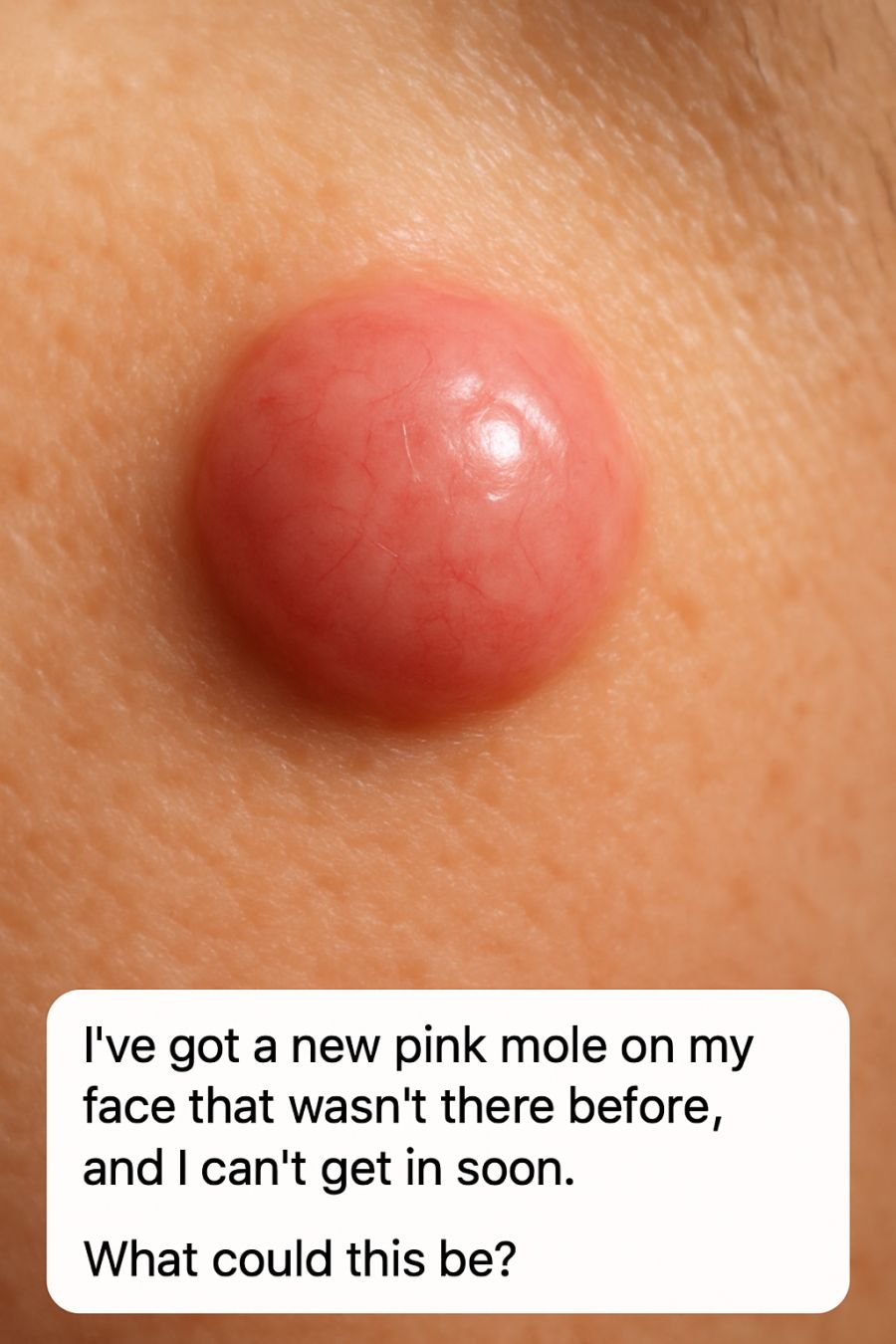
Discovering a new pink mole on your face can be unsettling. Such changes in your skin can happen for a variety of reasons, some benign and others more concerning. Skin is our largest organ, and it reflects our overall health in many ways. Pink moles or spots can range from a simple pimple to something that requires medical attention.
Measuring the spot is important. Note its size, which could be in millimeters, and any changes in texture or color. Comparing these notes over time can provide valuable insights into whether the spot is evolving, which is a key factor in assessing potential risks.
Introduction: Why You Should Pay Attention, But Not Panic
While it’s natural to feel anxious about a new spot on your face, it’s crucial to approach the situation calmly. Not every new mole or spot is a cause for concern. According to dermatologists, many skin changes are benign and part of the natural aging process.
It’s essential, however, to monitor the spot for any changes in size, color, or shape, as these could be indicative of underlying issues. Use a systematic approach to track any developments, which can help in providing your healthcare provider with detailed information if needed.
1. Could It Be a Benign Mole That Just Showed Up Now?
Moles, or nevi, are common skin growths that can appear at any age. They are usually brown or black, but can sometimes appear pink, especially on lighter skin tones. These benign moles are typically uniform in color and round in shape.
New moles appearing in adulthood are not uncommon, but they should be monitored for changes. If the mole remains consistent in appearance without any rapid changes, it is likely benign. Nonetheless, it’s wise to have all new moles evaluated by a dermatologist during routine skin checks.
2. Pink Pimples, Ingrown Hairs, and Other Harmless Look-Alikes
Sometimes, what appears to be a new mole might actually be a pink pimple or an ingrown hair. These are both common occurrences and generally harmless. Pimples can appear as red or pink bumps, often with a white tip, and are caused by clogged pores.
Ingrown hairs occur when a hair grows back into the skin, leading to a pink bump that can sometimes be itchy or tender. Both of these conditions typically resolve on their own or with basic skincare treatments.
3. Basal Cell Carcinoma: The Most Common Cause of a New Pink Bump
Basal cell carcinoma (BCC) is the most common form of skin cancer and often presents as a new pink bump on the skin. While BCC is generally slow-growing and rarely metastasizes, it can cause significant local damage if left untreated.
BCC typically appears as a shiny, pearly bump that might bleed easily or develop a crust. It often occurs on sun-exposed areas of the skin, such as the face, and is more common in individuals with fair skin.
4. Key Warning Signs That a Pink Mole Might Be Skin Cancer
There are several warning signs that a pink mole might be cancerous: asymmetry, irregular borders, multiple colors, a diameter larger than a pencil eraser (about 6mm), and any evolution in size or shape. These are part of the ‘ABCDE’ rule used to evaluate moles for melanoma, a more serious form of skin cancer.
Additionally, if the mole is persistently itchy, bleeding, or painful, these could be signs that warrant a professional evaluation.
5. How Basal Cell Carcinoma Typically Looks and Feels on the Face
Basal cell carcinoma often presents as a pearly or waxy bump on the face. It can also appear as a flat, flesh-colored or brown scar-like lesion. BCCs can sometimes be itchy or bleed after minor trauma, such as washing your face.
These lesions are typically painless but can grow in size over time. Catching BCC early is crucial, as it allows for simpler and more effective treatment options.
6. Other Possibilities: From Sebaceous Hyperplasia to Skin Tags
Sebaceous hyperplasia is a common, benign condition often confused with BCC. It appears as small, yellowish or pinkish bumps, usually on the face, and is caused by an overgrowth of sebaceous glands.
Skin tags, another benign growth, are small, soft, skin-colored growths that hang off the skin. They are more common in areas of friction and are harmless, though they can be removed if they cause discomfort or for cosmetic reasons.
7. Viral Skin-Check Hacks on TikTok and Why They Can Be Misleading
Social media platforms like TikTok are filled with skin-check hacks claiming to detect skin cancer or other conditions. While some tips can be helpful, many are misleading or not backed by scientific evidence.
It’s crucial to rely on professional medical advice rather than social media trends when it comes to something as serious as skin health. Dermatologists use specific tools and expertise that cannot be replaced by online tips.
8. Smart At-Home Monitoring: Photos, the ABCDE Rule, and the “Ugly Duckling” Test
Taking regular photos of your mole can help you track changes over time. The ABCDE rule is a helpful guide for evaluating moles: Asymmetry, Border, Color, Diameter, and Evolving. The ‘Ugly Duckling’ test involves looking for moles that stand out from others on your body.
This systematic approach can help identify potential issues early, allowing for timely medical intervention if necessary.
9. When You Can’t Get in Soon: Teledermatology, Urgent Care, and Nurse Triage
If you can’t see a dermatologist immediately, consider teledermatology services, which allow you to consult with a skin specialist remotely. Many clinics also offer nurse triage services that can provide initial assessments and guidance.
Urgent care centers can also evaluate skin lesions, especially if they are causing significant concern or discomfort.
10. What Not to Do: Squeezing, Popping, Burning, or DIY Mole Removal
It’s important not to attempt to remove or tamper with the mole yourself. Squeezing or popping a mole can lead to infection and make it difficult for a doctor to accurately assess the lesion.
DIY mole removal kits and methods can cause scarring and may not remove the entire lesion, potentially leaving behind cancerous cells. Always seek professional advice for mole removal.
11. Sun Exposure, Tanning Beds, and Your Future Skin Cancer Risk
Protecting your skin from UV exposure is key in preventing skin cancer. This includes wearing sunscreen with an SPF of at least 30, seeking shade, and avoiding tanning beds.
Cumulative sun exposure increases your risk of developing skin cancer, so adopting sun safety habits is crucial for long-term skin health.
12. Questions to Ask Your Dermatologist Once You Finally Get an Appointment
When you see your dermatologist, come prepared with questions. Inquire about the nature of the mole, whether it’s benign or needs treatment, and what follow-up care is necessary.
Ask about prevention strategies and how to monitor your skin for future changes. Understanding your specific skin type and risk factors can help you take proactive steps in maintaining healthy skin.