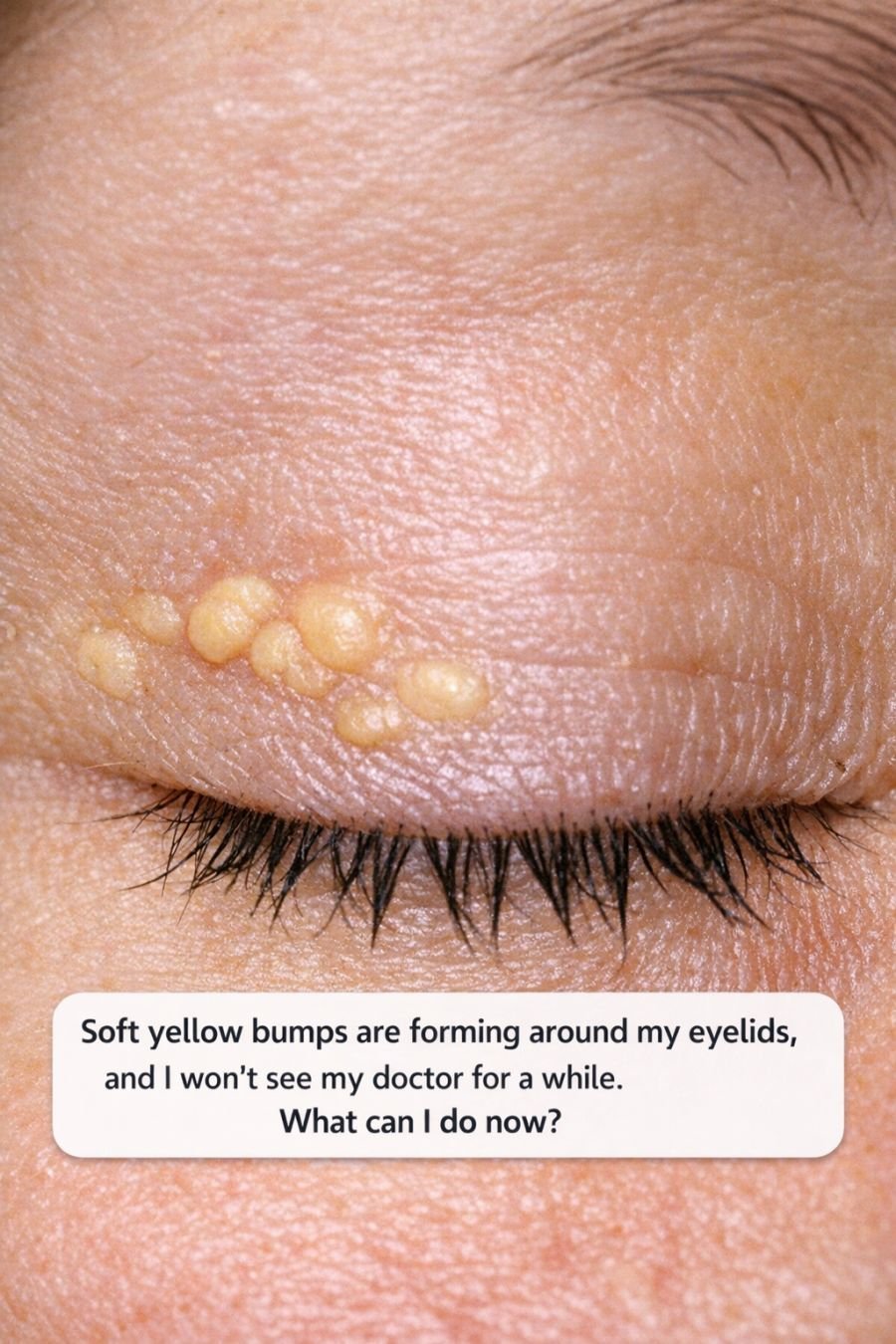
Soft yellow bumps forming around your eyelids can be an unexpected and concerning development. While it might be tempting to jump to conclusions, understanding what these bumps are and what they mean for your health is crucial. In many cases, these bumps are harmless, but they can sometimes indicate underlying health issues that require attention.
If you’re unable to see your doctor immediately, there are several steps you can take to manage your symptoms and gather useful information for your future appointment. This article will guide you through understanding these bumps, potential home care, and how to prepare for a more effective consultation with your healthcare provider.
1. What Those Soft Yellow Bumps Around Your Eyes Likely Are
The soft yellow bumps you’re noticing are likely xanthelasma, which are cholesterol deposits that usually appear on the eyelids. These deposits are typically flat or slightly raised and have a distinct yellow color due to their lipid content. Xanthelasma is most commonly found in people with elevated cholesterol levels, but it can also occur in individuals with normal cholesterol levels.
These lesions are generally painless and develop symmetrically around the eyes. While they are not harmful on their own, they can be a cosmetic concern for many people. It’s important to note that they can be a marker for more serious cardiovascular issues, which is why they shouldn’t be ignored.
2. How To Tell If It’s Xanthelasma Or Something More Serious
While xanthelasma is the most common cause of yellow bumps around the eyes, it’s important to distinguish them from other conditions. For instance, milia, which are small white or yellowish cysts, can also form around the eyes but are typically smaller and more uniform in size.
Xanthelasma are usually soft and have a well-defined edge, whereas other conditions like syringomas or sebaceous hyperplasia might present differently. If the bumps are painful, growing rapidly, or associated with other symptoms such as vision changes or systemic illness, it’s important to seek medical attention promptly, as these could be signs of more serious issues.
3. When You Can Safely Wait—And When To Seek Urgent Care
If the bumps are painless, not rapidly changing, and you don’t have any additional symptoms like vision changes, it’s generally safe to wait for your next doctor’s appointment. However, if you experience sudden growth of the bumps, pain, redness, or any changes in your vision, you should seek urgent care to rule out more serious conditions.
Similarly, if you have a personal or family history of heart disease or high cholesterol, it’s wise to prioritize a medical evaluation, even if the bumps themselves don’t seem concerning. Your doctor can perform necessary tests to ensure there are no underlying health issues.
4. Simple At-Home Care To Keep The Area Comfortable And Protected
To keep the area around your eyes comfortable, avoid rubbing or applying pressure to the bumps. Use a gentle cleanser to wash your face, and pat the area dry with a soft towel. It can also be helpful to use a fragrance-free moisturizer to keep the skin hydrated, but avoid heavy creams that might exacerbate the issue.
Wearing sunglasses can protect the area from UV exposure, which might help prevent the bumps from worsening. Additionally, if you wear makeup, choose products that are labeled as non-comedogenic and avoid applying them directly over the bumps to reduce irritation.
5. Everyday Habits To Avoid That Can Make The Bumps Worse
Certain habits can exacerbate the appearance of xanthelasma. For example, smoking can contribute to higher cholesterol levels and cardiovascular problems, which in turn can worsen xanthelasma. Excessive sun exposure without protection can also lead to skin damage and should be avoided.
Additionally, a diet high in saturated fats and cholesterol can increase the likelihood of developing these deposits. Consider reducing your intake of fried foods, red meat, and full-fat dairy products, and opt for healthier fats found in fish, nuts, and olive oil.
6. Diet Tweaks Now That May Help Your Cholesterol And Future Bumps
Making dietary changes can have a significant impact on your cholesterol levels and potentially prevent further development of xanthelasma. Incorporating more fruits, vegetables, whole grains, and lean proteins into your diet can help lower cholesterol levels. Foods high in soluble fiber, such as oats, beans, and lentils, are particularly beneficial.
Additionally, including foods rich in omega-3 fatty acids, like salmon, walnuts, and flaxseeds, can support heart health. Reducing your intake of processed foods, sugary snacks, and beverages can also contribute to better lipid profiles and overall health.
7. Over-The-Counter Products: What Helps, What’s Hype, And What To Skip
There are several over-the-counter products that claim to reduce or eliminate xanthelasma, but their effectiveness is often limited. Creams containing retinoids or alpha hydroxy acids might help improve skin texture but are unlikely to significantly affect the bumps.
It’s important to be wary of products that promise rapid results or contain harsh ingredients, as these can irritate the sensitive skin around the eyes. Instead, focus on gentle skincare and consult with a dermatologist for more effective treatment options.
8. Tracking Your Symptoms So Your Future Doctor Visit Is More Useful
Keeping a detailed record of your symptoms can be incredibly useful for your future doctor’s visit. Note when you first noticed the bumps, any changes in size or appearance, and any associated symptoms such as pain or vision changes.
Additionally, track any changes in your diet, lifestyle, or stress levels that might correlate with the appearance of the bumps. This information can help your doctor determine the underlying cause and recommend appropriate treatments or lifestyle modifications.
9. Cosmetic Concerns: What To Know About Scars, Makeup, And Cover-Ups
If the appearance of xanthelasma is a cosmetic concern, there are several options to consider. Makeup can be used to conceal the bumps, but it’s important to choose products that are gentle and non-irritating. Look for concealers with a yellow undertone to counteract the color of the bumps.
If you are considering removal for cosmetic reasons, consult with a dermatologist about potential treatments such as laser therapy or surgical excision. Be aware that these procedures can sometimes result in scarring, so discuss the risks and benefits thoroughly with your healthcare provider.
10. How Xanthelasma Connects To Your Heart And Cholesterol Health
Xanthelasma can be an indicator of underlying lipid abnormalities and increased cardiovascular risk. These cholesterol deposits are often associated with elevated LDL cholesterol levels, which can contribute to atherosclerosis and other heart-related issues.
It’s crucial to address any potential lipid imbalances through lifestyle changes, dietary modifications, and, if necessary, medication. Regular monitoring of your cholesterol levels and cardiovascular health can help prevent complications and promote overall wellness.
11. Questions To Prepare Now For Your Next Doctor’s Appointment
Preparing a list of questions for your doctor’s appointment can ensure you get the most out of your visit. Consider asking about the underlying causes of xanthelasma, potential treatment options, and any lifestyle changes you should make.
Additionally, inquire about any necessary tests to assess your cholesterol levels and cardiovascular health. Understanding the connection between these bumps and your overall health can help you make informed decisions about your care. Finally, ask about follow-up appointments and how to monitor your condition over time.