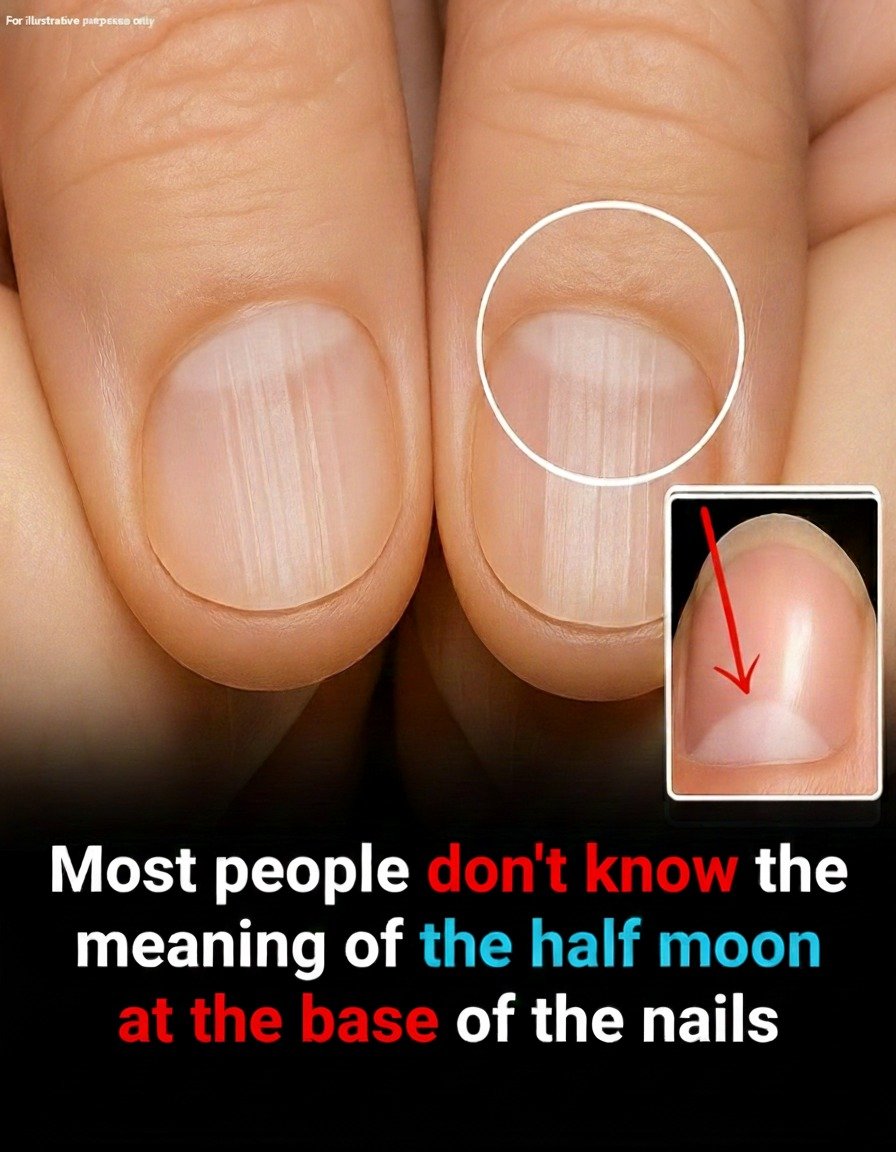
At the base of your fingernails lies a tiny, pale crescent that most people rarely notice. Known as the lunula, this delicate half-moon is more than a cosmetic detail—it can sometimes offer subtle clues about your overall health
What Is the Lunula?
The word lunula comes from Latin, meaning “little moon.” It refers to the whitish, crescent-shaped area just above the cuticle.
What you’re seeing is part of the nail matrix, the tissue responsible for producing new nail cells. Because this area has fewer visible blood vessels than the rest of the nail bed, it appears lighter in color.

Why Some Lunulae Are More Visible Than Others
Lunulae vary widely from person to person. For some, they’re prominent—especially on the thumbs. For others, they’re faint or barely visible. This variation is usually normal and influenced by factors such as:
- Genetics and skin tone
- Age (lunulae often become less visible over time)
- Nail thickness
- Lighting conditions
In many cases, not seeing a lunula clearly is completely normal and not a cause for concern.
When Changes Might Be Worth Noticing
Although natural variation is common, sudden or widespread changes in the lunula can sometimes reflect underlying health issues. Health professionals recommend looking for patterns across several nails, rather than focusing on a single finger.
Possible changes include:
Enlarged lunula: If it covers more than one-third of the nail, it may be associated with conditions such as an overactive thyroid (hyperthyroidism), high blood pressure, or cardiovascular strain.
Disappearing lunula: When lunulae fade or vanish across multiple nails, it can be linked to iron deficiency, vitamin B12 deficiency, or chronic fatigue.
Color changes
- Bluish or purplish: possible reduced oxygen circulation
- Very pale or gray: reduced blood flow or medication effects
- Reddish or blotchy: potential inflammation or vascular changes
These signs do not mean a diagnosis, but they may be worth discussing with a healthcare provider—especially if they appear alongside symptoms like weakness, brittle nails, or shortness of breath.